Public Safety

Emergency Medical Technician - Paramedic

Remote video URL
315311
TECDIP
39.00

Save lives as an EMT-Paramedic. Paramedics respond to emergencies and provide aid to victims of accidents or those experiencing a medical emergency such as cardiac arrest. Under direct medical control, these professionals render advanced aid by administering medication, performing and interpreting diagnostic tests such as EKGs, and intubating patients, in addition to performing the basic lifesaving measures of an EMT. The program offers a combination of classroom learning and field experiences.

Increased job opportunities will be available to you as a paramedic. In addition to ambulance services and fire departments, paramedics can find themselves working in industrial settings, in correctional facilities, and in hospital emergency rooms.

After successfully completing the program, you're ready to take the National Registry Paramedic written and practical examination in order to be eligible for a license in Wisconsin. You may also choose to continue at Western to earn a Paramedic Technician associate degree for increased earning potential.

The Paramedic program's minimum expectation is to prepare Paramedics who are competent in the cognitive (knowledge), psychomotor (skills), and affective (behavior) learning domains to enter the profession.

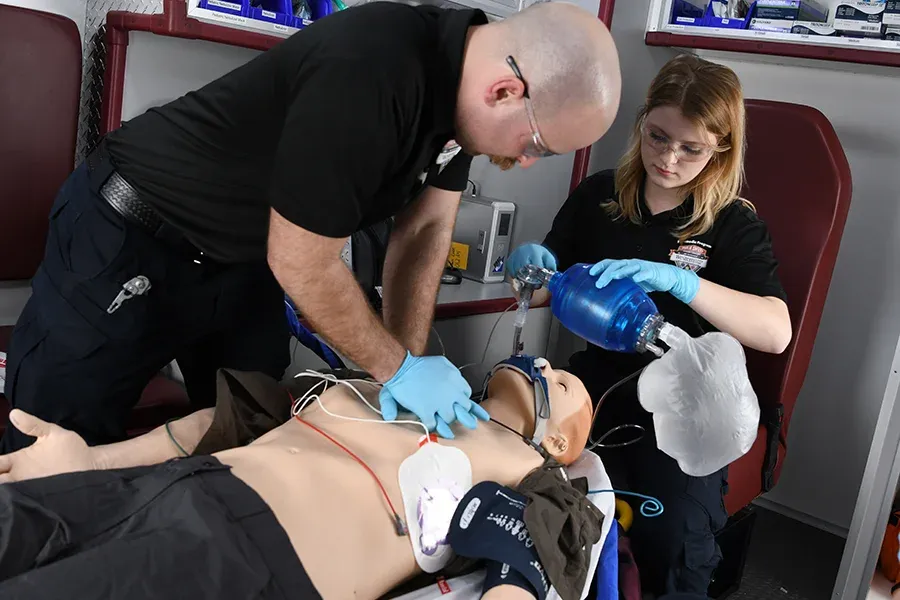
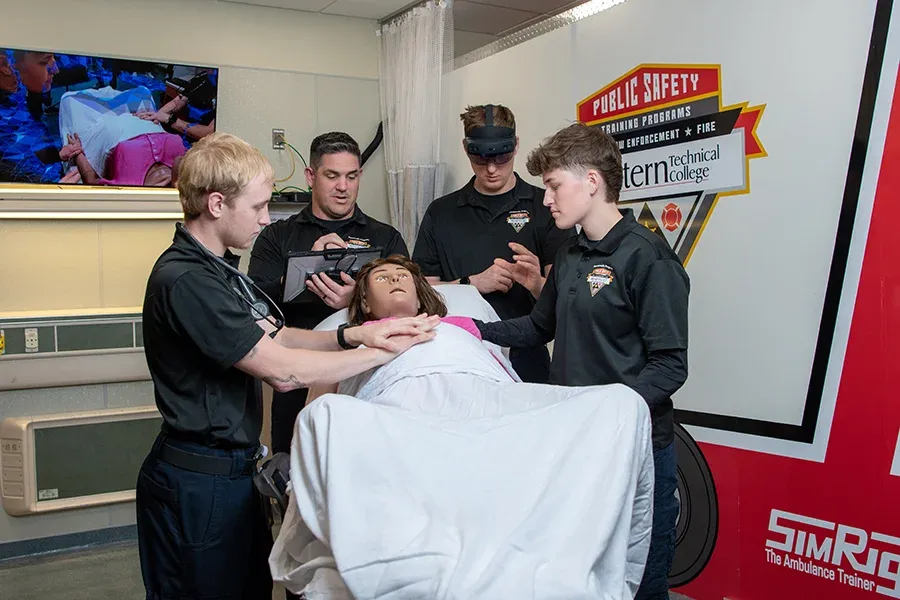
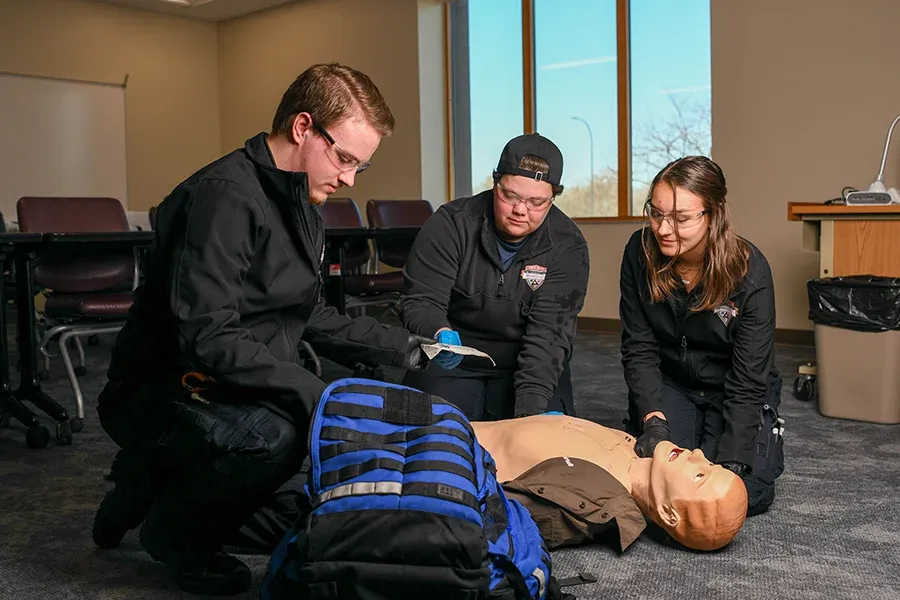
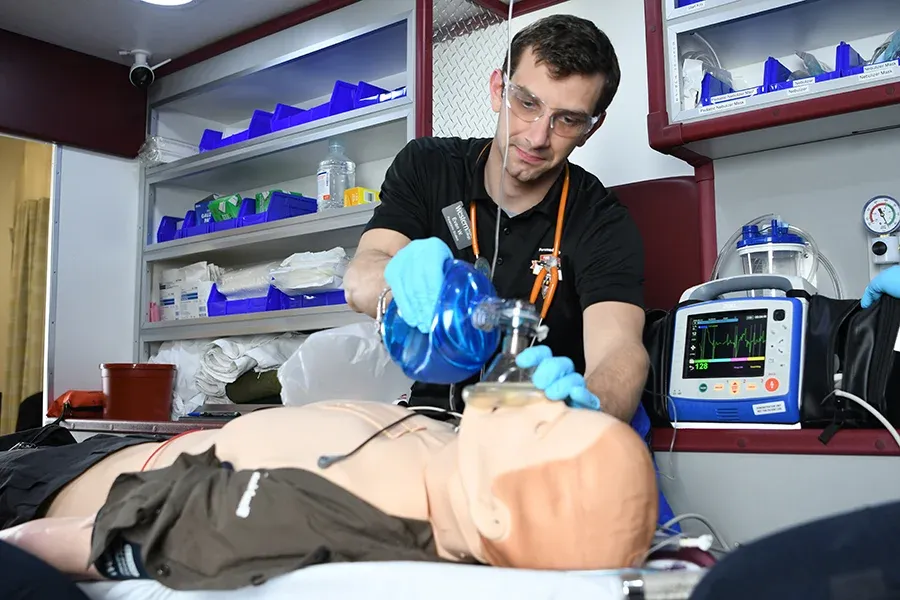
You will prepare for real-world emergencies with immersive training in our Simulation and Extended Reality (XR) Labs, utilizing high-fidelity manikins and virtual environments. Explore the Simulation and XR Labs.

To view the Emergency Medical Technician - Paramedic program’s required disclosure on professional licensure, please click here (PDF).

The Paramedic Program core courses are held at the Sparta Public Safety Training Facility in Sparta, Wisconsin.

$6,545
Location
Sparta

Previous education and work experience could qualify for Credit for Prior Learning, saving you time and money. Find out more about what may apply to this program.

Graduates - 41
Graduates Responding - 22
Employed In Related Occupation - 12
Employed In Non-related Occupations - 0
Seeking Employment - 0
Continuing Education - 10
Not In Labor Market - 0
Graduates Responding Employed Part Time in Related Occupation - 1
PT Average Hours per Week - 30
PT Median Hourly Wage - $22.00
PT Hourly Wage Range - $22.00
Graduates Responding Employed Full Time in Related Occupation - 9
FT Average Hours per Week - 52
FT Median Hourly Wage - $24.29
FT Hourly Wage Range - $24.00 - $25.00
FT Median Annual Salary - $59,150
Related Occupations - EMT-Paramedic, Paramedic

Additional Requirements

To enroll in the EMT – Paramedic program, first apply for admission to the College, then electronically sign the program's Technical Standards, complete a background check, provide proof of immunization (including a TB Test), complete American Heart Association Healthcare Provider CPR certification, and read and return a signed copy of the supplemental information document.  You can find links to these document below. In addition, you must hold a Wisconsin EMT-Basic or Advanced License. Please see the details below.

The Emergency Medical Technician - Paramedic program follows Western's policies regarding the Transfer of Credits and Credit for Prior Learning. 

Most of Western’s classes require the use of a personal computer or laptop, standard software, internet access, and other technology-related items.

If you do not have a personal computer or laptop, or if the one you have does not meet the following criteria, resources may be available. Submit a Student Resource Request using our online form.

Computer/Laptop Hardware

  • Smartphones are not recommended for completing assignments.
  • Chromebooks are not recommended due to issues with installing software that is needed for classes, such as Office 365.
  • Web camera with microphone (usually built into newer laptops or can be purchased separately) is necessary for online participation.

Software Needs

For detailed specifications, please review Technology and Software Recommendations for Most Classes on Western’s IT Knowledgebase.

Campus Resources

Need Assistance?

  • Contact the Learning Commons! The staff are happy to answer questions, provide individualized assistance, and direct you to other supports as needed.

EMT - Paramedic

Firefighter/Paramedic

Critical Care Technician/Paramedic

The Western Technical College EMT – Paramedic program is accredited by the Commission on Accreditation of Allied Health Education Programs (www.caahep.org) upon the recommendation of the Committee on Accreditation of Educational Programs for the Emergency Medical Services Professions (CoAEMSP).

View the most current CoAEMSP Annual Report, including Paramedic program outcomes.

Commission on Accreditation of Allied Health Education Programs
9355 – 113th Street North, #7709
Seminole, FL  33775
Phone: 727-210-2350
www.caahep.org

To contact CoAEMSP:
Phone: 214-703-8445
Fax: 214-703-8992
www.coaemsp.org

  • Prepare for incident response and EMS operations
  • Integrate pathophysiological principles and assessment findings to provide appropriate patient care
  • Demonstrate paramedic skills associated with established standards and procedures for a variety of patient encounters
  • Communicate effectively with others
  • Demonstrate professional behavior
  • Meet state and national competencies listed for paramedic certification(s)

Our Health and Public Safety programs are required to report additional information to prospective students, including certification exams, licensure, program completion rates, etc. You can find this information in the document below:

Western Technical College is accredited by the Higher Learning Commission (HLC). For more information, see our Performance Excellence and Accreditation page.

Program Contact

Debra Slaby
Program Chair, EMT Paramedic
608-789-4761
SlabyD@westerntc.edu 

This program is part of a career pathway, a laddered approach to career education. It allows you to earn employer-recognized credentials that lead to job and career advancement.

1
icon - in-person learning format
In-Person
icon - calendar
Fall
Start

Other Programs in This Area of Interest

This Area of Interest is for those who want to learn to protect people, respond in emergency situations, and make a difference in the community.

An EMT student practices techniques on a dummy in a laboratory setting.
Is New Program
Off

Advanced EMT

Remote video URL
305316
TECDIP
5.00

If you are already certified as an Emergency Medical Technician (EMT), this course provides additional training that allows you to provide even more lifesaving care. Advanced patient assessment, communication, and beginning advanced life support interventions are among the topics covered.

To view the Advanced EMT program’s required disclosure on professional licensure, please click here (PDF).

$839
Location
La Crosse
Location
Black River Falls
Location
Independence
Location
Mauston
Location
Tomah
Location
Viroqua
Location
Sparta

Previous education and work experience could qualify for Credit for Prior Learning, saving you time and money. Find out more about what may apply to this program.

Graduates - 20
Graduates Responding - 6
Employed In Related Occupation - 0
Employed In Non-related Occupations - 3
Seeking Employment - 0
Continuing Education - 3
Not In Labor Market - 0
Graduates Responding Employed Part Time in Related Occupation - 0
Graduates Responding Employed Full Time in Related Occupation - 0
FT Median Annual Salary - $34,229 (Median earnings based on graduate exit interview data not available. This salary represents cost-of-living adjusted 25th percentile salary by occupation from Lightcast Analyst, used as a proxy for entry-level salary.)

Additional Requirements

To enroll in the Advanced EMT Certificate program, first apply for admission to the College, then electronically sign the program's Technical Standards, complete a background check, provide proof of immunization (including a TB Test), read and return a signed copy of the supplemental information document, and complete American Heart Association BLS Healthcare Provider CPR certification. You can find links to these document below. In addition, you must hold a Wisconsin EMT-Basic License. Please see the details below.

Most of Western’s classes require the use of a personal computer or laptop, standard software, internet access, and other technology-related items.

If you do not have a personal computer or laptop, or if the one you have does not meet the following criteria, resources may be available. Submit a Student Resource Request using our online form.

Computer/Laptop Hardware

  • Smartphones are not recommended for completing assignments.
  • Chromebooks are not recommended due to issues with installing software that is needed for classes, such as Office 365.
  • Web camera with microphone (usually built into newer laptops or can be purchased separately) is necessary for online participation.

Software Needs

For detailed specifications, please review Technology and Software Recommendations for Most Classes on Western’s IT Knowledgebase.

Campus Resources

Need Assistance?

  • Contact the Learning Commons! The staff are happy to answer questions, provide individualized assistance, and direct you to other supports as needed.

EMT - Basic

EMT - Advanced

Emergency Medical Technician

EMT - Ambulance Service

Telecommunicator 911 Dispatch

  • Prepare for incident response and EMS operations
  • Integrate pathophysiological principles and assessment findings to provide appropriate patient care
  • Demonstrate AEMT skills associated with established standards and procedures for a variety of patient encounters
  • Communicate effectively with others
  • Demonstrate professional behavior
  • Meet state competencies for AEMT certification

This program is part of a career pathway, a laddered approach to career education. It allows you to earn employer-recognized credentials that lead to job and career advancement.

1
icon - hybrid learning format
Hybrid
icon - calendar
Fall
Start
icon - calendar
Spring
Start
icon - calendar
Summer
Start

Other Programs in This Area of Interest

This Area of Interest is for those who want to learn to protect people, respond in emergency situations, and make a difference in the community.

EMT students practice resuscitation techniques on a dummy.
Is New Program
Off

Emergency Medical Technician

Remote video URL
305313
TECDIP
7.00

As an Emergency Medical Technician (EMT), you're on the front lines providing lifesaving care to people in need. You'll learn how to assess a patient's illness or injury, render aid, and use proper procedures and precautions when treating a patient. This 252-hour program prepares you for all aspects of emergency medical care, including medical and trauma situations sanctioned by the Wisconsin Division of Health. Although most EMTs have historically worked for ambulance services, many also find employment in fire departments, clinics, and hospitals.

  This program contains the EMR (Emergency Medical Responder) EMT Part 1 course (3 credits) and the EMT Part 2 course (4 credits), meeting requirements for licensure in Wisconsin and certification with the National Registry of Emergency Medical Technicians. Take the full program in one term and earn a technical diploma upon successful completion. You will be required to take a practical and written exam to become nationally registered and then apply for a license to work as EMTs in Wisconsin. Continue your education to earn the EMT-Paramedic Technical Diploma and/or the Paramedic Technician associate degree for further job opportunities and earning potential.

The Emergency Medical Technician program is offered in a variety of ways.

  • EMT – Technical diploma: Take the full program in one term – 252 hours – and earn a technical diploma upon completion.
  • Emergency Medical Responder to Emergency Medical Technician Part 1 (EMR-EMT Part 1): This course is the first part of the two-course full EMT Program. The course provides foundational knowledge for Emergency Medical Technician (EMT) candidates and all requirements for Emergency Medical Responder (EMR) candidates. Topics include basic anatomy and physiology, patient assessment, traumatic injury management, airway management, cardiac management, and basic medical care. Upon successful completion, candidates will be eligible to participate in the National Registry of EMT's Emergency Medical Responder exams required for the Wisconsin EMR certification. There are no pre-requisites to this course. You have the option to step out as an EMR or continue in EMT Part 2 in order to complete the full EMT Program.
  • Emergency Medical Technician Part 2 (EMT Part 2): This course is the second part of the two-course full EMT Program. It will further build upon the base knowledge of the EMR and EMT Part 1 course. Topics include expanded anatomy, physiology, and pathophysiology, disease processes, more complex patient assessment, and critical thinking skills. Additional skills will be covered as allowed by the Wisconsin Department of Health Services EMS Section Scope of Practice for EMTs. Upon successful completion, candidates will be eligible to participate in the National Registry of EMTs exam required for Wisconsin EMT licensure. Pre-requisites for this course are concurrent enrollment in the EMR-EMT Part 1 course, OR completion of an EMR stand-alone course, or EMR to EMT Part 1, at a Wisconsin Technical College System school within the past 24 months, or a current Wisconsin license as an Emergency Medical Responder.

To view the Emergency Medical Technician program’s required disclosure on professional licensure, please click here (PDF).

$1,175
Location
La Crosse
Location
Black River Falls
Location
Independence
Location
Mauston
Location
Tomah
Location
Viroqua
Location
Sparta

Previous education and work experience could qualify for Credit for Prior Learning, saving you time and money. Find out more about what may apply to this program.

Additional Requirements

To enroll in the Emergency Medical Technician program, first apply for admission to the College, then complete a background check, electronically sign the program's Technical Standards, and read and return a signed copy of the supplemental information document. You can find links to these document below.

Emergency Medical Technician Full Program
EMR to EMT Part 1
EMT Part 2

Most of Western’s classes require the use of a personal computer or laptop, standard software, internet access, and other technology-related items.

If you do not have a personal computer or laptop, or if the one you have does not meet the following criteria, resources may be available. Submit a Student Resource Request using our online form.

Computer/Laptop Hardware

  • Smartphones are not recommended for completing assignments.
  • Chromebooks are not recommended due to issues with installing software that is needed for classes, such as Office 365.
  • Web camera with microphone (usually built into newer laptops or can be purchased separately) is necessary for online participation.

Software Needs

For detailed specifications, please review Technology and Software Recommendations for Most Classes on Western’s IT Knowledgebase.

Campus Resources

Need Assistance?

  • Contact the Learning Commons! The staff are happy to answer questions, provide individualized assistance, and direct you to other supports as needed.

Emergency Medical Technician

  • Prepare for incident response and EMS operations
  • Integrate pathophysiological principles and assessment findings to provide appropriate patient care
  • Demonstrate EMT skills associated with established standards and procedures for a variety of patient encounters
  • Communicate effectively with others
  • Demonstrate professional behavior
  • Meet state competencies for EMT certification

This program is part of a career pathway, a laddered approach to career education. It allows you to earn employer-recognized credentials that lead to job and career advancement.

0
icon - hybrid learning format
Hybrid
icon - calendar
Fall
Start
icon - calendar
Spring
Start
icon - calendar
Summer
Start

Other Programs in This Area of Interest

This Area of Interest is for those who want to learn to protect people, respond in emergency situations, and make a difference in the community.

A group of EMT students work together to practice techniques on a dummy in the simulation lab.
Is New Program
Off

Criminal Justice-Law Enforcement 720 Academy

305042
TECDIP
22.00

This program is specifically designed for those with a minimum of 40 accredited college-level credits who seek to meet Wisconsin certification requirements as a law enforcement officer. In this role, you'll be responsible for the preservation of law and order in your community. You'll learn numerous skills related to the profession of law enforcement. Your training will also include crime prevention, crime investigation, vehicle patrols, and assisting the public.

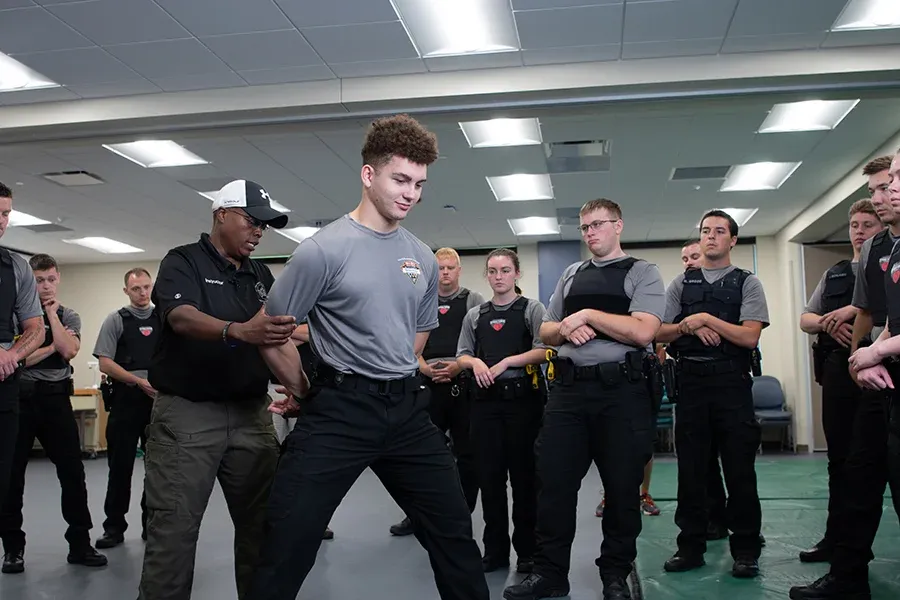
This program includes in-class fitness training and other physical education such as defensive tactics and fire arms training. You'll have plenty of opportunities to practice your skills with hands-on training and scenario-based field simulations.

Find out more about Western's Public Safety Training Facility.

To view the Criminal Justice-Law Enforcement 720 Academy program’s required disclosure on professional licensure, please click here (PDF).

$3,692
Location
Sparta

Previous education and work experience could qualify for Credit for Prior Learning, saving you time and money. Find out more about what may apply to this program.

Graduates - 72
Graduates Responding - 20
Employed In Related Occupation - 13
Employed In Non-related Occupations - 4
Seeking Employment - 0
Continuing Education - 2
Not In Labor Market - 1
Graduates Responding Employed Part Time in Related Occupation - 0
Graduates Responding Employed Full Time in Related Occupation - 13
FT Average Hours per Week - 43
FT Median Hourly Wage - $32.00
FT Hourly Wage Range - $27.04 - $34.50
FT Median Annual Salary - $53,700
Related Occupations - Armed Security Officer, Deputy Sheriff, Law Enforcement Officer, Patrol Deputy, Police Office

Additional Requirements

  • High School or GED/HSED Transcript is required.
  • For an admission packet for the 720-hour Law Enforcement Academy, please contact the Sparta Public Safety Training Center by phone at 608-789-4747 or by email at sparta@westerntc.edu.

The following requirements must be met by students enrolling in preparatory law enforcement officer training:

  • Be 18 years of age or older.
  • Possess a general educational development diploma or be a high school graduate.
  • Possess either a two‐year associate degree from a Wisconsin technical college system district or its accredited equivalent from another state or a minimum of 40‐accredited credits (semester credits) or 90‐accredited quarter credits.
  • Possess a valid Wisconsin driver’s license or other such valid operator’s permit recognized by the Wisconsin Department of Transportation as authorizing operation of a motor vehicle in Wisconsin.
  • Must not have been convicted of any federal felony or of any offense which if committed in Wisconsin could be punished as a felony unless the applicant has been granted an absolute and unconditional pardon.
  • Must not have been convicted of any misdemeanor crime of domestic violence unless the applicant has been granted an absolute and unconditional pardon.
  • Be citizens of the United States.
  • Undergo a medical assessment by a Wisconsin licensed physician, physician assistant, or nurse practitioner to verify that they can meet the physical standards required of a law enforcement officer.
  • Complete a satisfactory oral interview with a panel of law enforcement executives or with teaching or counseling staff affiliated with the training school to determine suitability for law enforcement employment and to assess applicant demeanor, background and ability to communicate.

Cost for the 720 Academy

The cost for the 720 Law Enforcement Academy is $5,000. This is based upon an estimated $3,700 tuition costs and an additional estimated $1,300 for law enforcement skills evaluation fees.

Most of Western’s classes require the use of a personal computer or laptop, standard software, internet access, and other technology-related items.

If you do not have a personal computer or laptop, or if the one you have does not meet the following criteria, resources may be available. Submit a Student Resource Request using our online form.

Computer/Laptop Hardware

  • Smartphones are not recommended for completing assignments.
  • Chromebooks are not recommended due to issues with installing software that is needed for classes, such as Office 365.
  • Web camera with microphone (usually built into newer laptops or can be purchased separately) is necessary for online participation.

Software Needs

For detailed specifications, please review Technology and Software Recommendations for Most Classes on Western’s IT Knowledgebase.

Campus Resources

Need Assistance?

  • Contact the Learning Commons! The staff are happy to answer questions, provide individualized assistance, and direct you to other supports as needed.

Police Officer

Deputy Sheriff

Jailer

Security Officer

Law Enforcement Officer

State Patrol Officer

  • Think critically
  • Manage emergencies
  • Communicate effectively
  • Demonstrate professionalism
  • Conduct investigations
  • Interact with others
  • Demonstrate tactical skills \[applies to Certification Track only\]

This program is part of a career pathway, a laddered approach to career education. It allows you to earn employer-recognized credentials that lead to job and career advancement.
1
icon - in-person learning format
In-Person
icon - calendar
Spring
Start
icon - calendar
Summer
Start

Other Programs in This Area of Interest

This Area of Interest is for those who want to learn to protect people, respond in emergency situations, and make a difference in the community.

Students practice self-defense moves in a classroom.
Is New Program
Off

Paramedic Technician

Remote video URL
105311
AAS
62.00

Can you respond to life or death situations in a calm and controlled manner? As a paramedic technician, you'd be first on the scene to provide critical care to the ill or injured. You need to be able to work independently, make decisions quickly and, most of all, be trained to use advanced lifesaving techniques in emergency situations. Through classroom instruction and valuable field experience, this associate degree program will provide you with the skills you need to work for ambulance services, fire departments, police departments, or hospitals.

The Paramedic program's minimum expectation is to prepare Paramedics who are competent in the cognitive (knowledge), psychomotor (skills), and affective (behavior) learning domains to enter the profession.

The Paramedic Program core courses are held at the Sparta Public Safety Training Facility in Sparta, Wisconsin.

$10,405
Location
Sparta

Previous education and work experience could qualify for Credit for Prior Learning, saving you time and money. Find out more about what may apply to this program.

Graduates - 13
Graduates Responding - 7
Employed In Related Occupation - 5
Employed In Non-related Occupations - 0
Seeking Employment - 0
Continuing Education - 2
Not In Labor Market - 0
Graduates Responding Employed Part Time in Related Occupation - 0
Graduates Responding Employed Full Time in Related Occupation - 5
FT Average Hours per Week - 51
FT Median Hourly Wage - $22.00
FT Hourly Wage Range - $16.50 - $27.00
FT Median Annual Salary - $79,000
Related Occupations - Paramedic

Additional Requirements

  • To enroll in the Paramedic Technician program, first apply for admission to the College, then electronically sign the program's Technical Standards, complete a background check, provide proof of immunization (including a TB Test), complete American Heart Association Healthcare Provider CPR certification, and read and return a signed copy of the supplemental information document. You can find links to these document below. In addition, you must complete the prerequisites to General Anatomy and Physiology with a grade of “C” or better and hold a Wisconsin EMT-Basic or Advanced License. Please see the details below.
  • The Paramedic Technician program follows Western's policies regarding the Transfer of Credits and Credit for Prior Learning. 

Most of Western’s classes require the use of a personal computer or laptop, standard software, internet access, and other technology-related items.

If you do not have a personal computer or laptop, or if the one you have does not meet the following criteria, resources may be available. Submit a Student Resource Request using our online form.

Computer/Laptop Hardware

  • Smartphones are not recommended for completing assignments.
  • Chromebooks are not recommended due to issues with installing software that is needed for classes, such as Office 365.
  • Web camera with microphone (usually built into newer laptops or can be purchased separately) is necessary for online participation.

Software Needs

For detailed specifications, please review Technology and Software Recommendations for Most Classes on Western’s IT Knowledgebase.

Campus Resources

Need Assistance?

  • Contact the Learning Commons! The staff are happy to answer questions, provide individualized assistance, and direct you to other supports as needed.

Paramedic

EMT-Paramedic

Firefighter/Paramedic

The Western Technical College Paramedic Technician program is accredited by the Commission on Accreditation of Allied Health Education Programs (www.caahep.org) upon the recommendation of the Committee on Accreditation of Educational Programs for the Emergency Medical Services Professions (CoAEMSP).

View the most current CoAEMSP Annual Report, including Paramedic program outcomes.

Commission on Accreditation of Allied Health Education Programs
9355 – 113th Street North, #7709
Seminole, FL  33775
727-210-2350
www.caahep.org

To contact CoAEMSP:
214-703-8445
FAX 214-703-8992
www.coaemsp.org

  • Prepare for incident response and EMS operations
  • Integrate pathophysiological principles and assessment findings to provide appropriate patient care
  • Demonstrate paramedic skills associated with established standards and procedures for a variety of patient encounters
  • Communicate effectively with others
  • Demonstrate professional behavior
  • Meet state and national competencies listed for paramedic certification(s)

Our Health and Public Safety programs are required to report additional information to prospective students, including certification exams, licensure, program completion rates, etc. You can find this information in the document below:

Western Technical College is accredited by the Higher Learning Commission (HLC). For more information, see our Performance Excellence and Accreditation page.

Program Contact

Debra Slaby
Program Chair, Paramedic Technician
SlabyD@westerntc.edu
608-789-4761

This program is part of a career pathway, a laddered approach to career education. It allows you to earn employer-recognized credentials that lead to job and career advancement.

1
icon - in-person learning format
In-Person
icon - calendar
Fall
Start

Other Programs in This Area of Interest

This Area of Interest is for those who want to learn to protect people, respond in emergency situations, and make a difference in the community.

Students practicing on training doll in classroom
Is New Program
Off

Criminal Justice

105045
AAS
62.00

Pursue a rewarding career in the field of criminal justice with the knowledge and skills acquired through this associate degree program. At Western, you'll gain the expertise needed to make meaningful contributions to community safety and well-being. Coursework spans a wide range of subject matter essential for entry-level criminal justice professionals, emphasizing the integration of theory and practical application.

With this degree, you'll have the opportunity to pursue specialized certifications in law enforcement and jail operations by enrolling in and successfully completing the respective academies offered at Western. Additionally, for those aiming to further their education, Western maintains transfer agreements with many local universities, creating a seamless pathway to attain a bachelor's degree in criminal justice or related fields.

Courses are taught by full-time educators, law enforcement officers, and supervisors recognized as leaders in law enforcement training.

To view the Criminal Justice program’s required disclosure on professional licensure, please click here (PDF).

$10,405
Location
La Crosse

Previous education and work experience could qualify for Credit for Prior Learning, saving you time and money. Find out more about what may apply to this program.

Graduates - 60
Graduates Responding - 27
Employed In Related Occupation - 5
Employed In Non-related Occupations - 2
Seeking Employment - 1
Continuing Education - 18
Not In Labor Market - 1
Graduates Responding Employed Part Time in Related Occupation - 0
Graduates Responding Employed Full Time in Related Occupation - 3
FT Average Hours per Week - 42
FT Median Hourly Wage - $21.00
FT Hourly Wage Range - $21.00
FT Median Annual Salary - $47,500
Related Occupations - Adolescent Secure Unit Worker, Police Officer, Security Assistant

Additional Requirements

  • High School or GED/HSED Transcript is required.
  • To enroll in the Criminal Justice program, first apply for admission to the College, then electronically sign the program's Technical Standards and complete a background check. You can find links to these documents below. Please see the details below.

Most of Western’s classes require the use of a personal computer or laptop, standard software, internet access, and other technology-related items.

If you do not have a personal computer or laptop, or if the one you have does not meet the following criteria, resources may be available. Submit a Student Resource Request using our online form.

Computer/Laptop Hardware

  • Smartphones are not recommended for completing assignments.
  • Chromebooks are not recommended due to issues with installing software that is needed for classes, such as Office 365.
  • Web camera with microphone (usually built into newer laptops or can be purchased separately) is necessary for online participation.

Software Needs

For detailed specifications, please review Technology and Software Recommendations for Most Classes on Western’s IT Knowledgebase.

Campus Resources

Need Assistance?

  • Contact the Learning Commons! The staff are happy to answer questions, provide individualized assistance, and direct you to other supports as needed.

Police Officer

Deputy Sheriff

Jailer

Security Officer

Law Enforcement Officer

State Patrol Officer

  • Illustrate the interrelationships of the three core components of the criminal justice system
  • Analyze situational responses
  • Apply communication skills as a criminal justice professional
  • Conduct investigations
  • Examine the professional code of ethics for a criminal justice practitioner
  • Explore personal wellness strategies for the criminal justice professions
  • Explain the role of criminal justice professionals in working with diverse populations

This program is part of a career pathway, a laddered approach to career education. It allows you to earn employer-recognized credentials that lead to job and career advancement.

1
icon - in-person learning format
In-Person
icon - calendar
Fall
Start

Other Programs in This Area of Interest

This Area of Interest is for those who want to learn to protect people, respond in emergency situations, and make a difference in the community.

An instructor lectures to a group of students about fingerprinting.
Is New Program
Off

Fire Protection Technician

105032
AAS
62.00

Western's Fire Protection Technician program is designed to provide you with the latest knowledge and skills in fire prevention and firefighting, preparing you for a rewarding career in the fire service. As a firefighter, you'll be a frontline responder, taking action in the face of accidents, fires, natural disasters, and various emergencies that jeopardize lives and property. You'll collaborate in teams to rescue victims, offer assistance, recover property, and operate essential firefighting equipment such as ladders and firefighting vehicles. During periods of non-emergencies, firefighters also play a vital role in educating individuals and businesses on fire safety, maintaining firefighting equipment, and conducting training to uphold your knowledge and skills.

While most firefighters serve in city fire departments, opportunities also exist in diverse settings such as airports, chemical plants, and wildland firefighting. The training offered in this program not only prepares you for these roles but also sets the stage for achieving essential certifications, including Wisconsin IFSAC Firefighter I & II, Fire Inspector I, Hazmat Operations, Driver/Operator-Pumper certification, and the Nationally Registered Emergency Medical Technician-Basic (NREMT-B) certification. With these skills and certifications, you will be well-equipped to make a significant impact in the field of fire protection and emergency response.

Courses are held at Western's state-of-the-art Public Safety Training Facility in Sparta.

Western also offers an Experienced Firefighter Pathway to help full-time firefighters complete their Fire Protection Technician associate degree while continuing to work and serve their communities. Read about this new offering.

To view the Fire Protection Technician program’s required disclosure on professional licensure, please click here (PDF).

$10,405
Location
Sparta

Previous education and work experience could qualify for Credit for Prior Learning, saving you time and money. Find out more about what may apply to this program.

Graduates - 31
Graduates Responding - 13
Employed In Related Occupation - 9
Employed In Non-related Occupations - 1
Seeking Employment - 1
Continuing Education - 2
Not In Labor Market - 0
Graduates Responding Employed Part Time in Related Occupation - 0
Graduates Responding Employed Full Time in Related Occupation - 8
FT Average Hours per Week - 56
FT Median Hourly Wage - $22.50
FT Hourly Wage Range - $20.00 - $28.00
FT Median Annual Salary - $57,850
Related Occupations - Captain/EMT, Dispatcher, Fire Fighter EMT, Firefighter, Rhinelander Fire Department

Additional Requirements

  • High School or GED/HSED Transcript

Most of Western’s classes require the use of a personal computer or laptop, standard software, internet access, and other technology-related items.

If you do not have a personal computer or laptop, or if the one you have does not meet the following criteria, resources may be available. Submit a Student Resource Request using our online form.

Computer/Laptop Hardware

  • Smartphones are not recommended for completing assignments.
  • Chromebooks are not recommended due to issues with installing software that is needed for classes, such as Office 365.
  • Web camera with microphone (usually built into newer laptops or can be purchased separately) is necessary for online participation.

Software Needs

For detailed specifications, please review Technology and Software Recommendations for Most Classes on Western’s IT Knowledgebase.

Campus Resources

Need Assistance?

  • Contact the Learning Commons! The staff are happy to answer questions, provide individualized assistance, and direct you to other supports as needed.

Firefighter

Firefighter/EMT

  • Model Fire Protection Technician (National Firefighter Code of Ethics) professional code of ethics
  • Perform fire prevention activities
  • Participate in incident management at an emergency
  • Model firefighter and EMS standards
  • Communicate clearly and effectively

This program is part of a career pathway, a laddered approach to career education. It allows you to earn employer-recognized credentials that lead to job and career advancement.

1
icon - in-person learning format
In-Person
icon - calendar
Fall
Start

Other Programs in This Area of Interest

This Area of Interest is for those who want to learn to protect people, respond in emergency situations, and make a difference in the community.

A group of firefighters in discussion at a training facility.
Is New Program
Off
Subscribe to Public Safety