
Fire Protection Technician
| Degree Type | Program Number | Program Code | Credits |
|---|---|---|---|
| Associate Degree | 105032 | FPTC | 62.00 |
| Typical Start | Learning Format | Financial Aid | Estimated Cost | Location | Area of Interest |
|---|---|---|---|---|---|
| Fall | In-Person | Available | 10961 | Sparta | Public Safety |
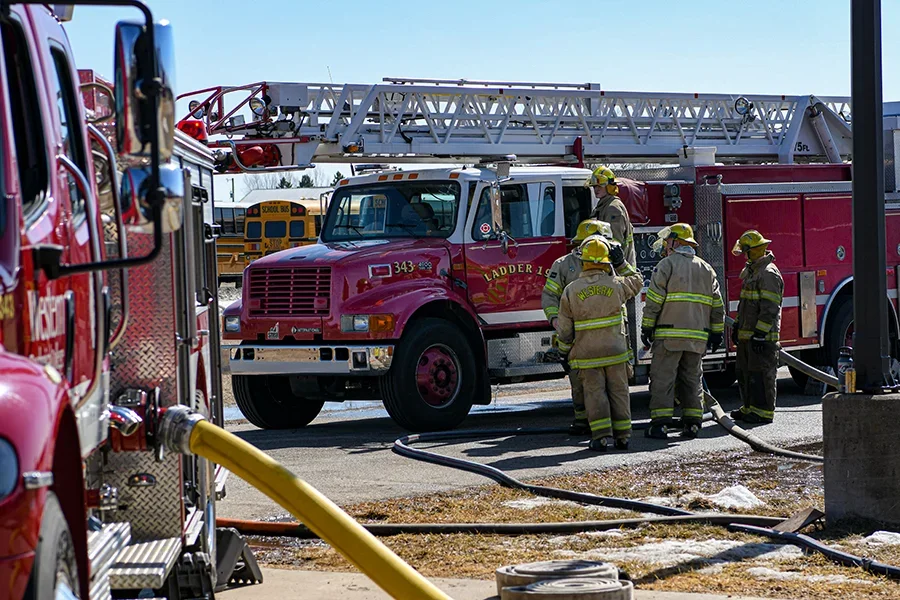
Western's Fire Protection Technician program is designed to provide you with the latest knowledge and skills in fire prevention and firefighting, preparing you for a rewarding career in the fire service. As a firefighter, you'll be a frontline responder, taking action in the face of accidents, fires, natural disasters, and various emergencies that jeopardize lives and property. You'll collaborate in teams to rescue victims, offer assistance, recover property, and operate essential firefighting equipment such as ladders and firefighting vehicles. During periods of non-emergencies, firefighters also play a vital role in educating individuals and businesses on fire safety, maintaining firefighting equipment, and conducting training to uphold your knowledge and skills.
While most firefighters serve in city fire departments, opportunities also exist in diverse settings such as airports, chemical plants, and wildland firefighting. The training offered in this program not only prepares you for these roles but also sets the stage for achieving essential certifications, including Wisconsin IFSAC Firefighter I & II, Fire Inspector I, Hazmat Operations, Driver/Operator-Pumper certification, and the Nationally Registered Emergency Medical Technician-Basic (NREMT-B) certification. With these skills and certifications, you will be well-equipped to make a significant impact in the field of fire protection and emergency response.
Courses are held at Western's state-of-the-art Public Safety Training Facility in Sparta.
Western also offers an Experienced Firefighter Pathway to help full-time firefighters complete their Fire Protection Technician associate degree while continuing to work and serve their communities. Read about this new offering.
To view the Fire Protection Technician program’s required disclosure on professional licensure, please click here (PDF).
Admissions Requirements
- Apply at www.westerntc.edu/how-to-apply
- Western’s Admission Coaches are available to help you through the application process. Have questions or need advice? Call 608-785-9200 or email AdmissionsCoach@westerntc.edu.
- Western must comply with a Waiting List Policy when academic programs meet capacity. This policy adheres to Wisconsin Administrative Code Chapter TCS10.07.
Additional Requirements
- High School or GED/HSED Transcript
Career Opportunities
Firefighter
Firefighter/EMT
Program Outcomes
- Model Fire Protection Technician (National Firefighter Code of Ethics) professional code of ethics
- Perform fire prevention activities
- Participate in incident management at an emergency
- Model firefighter and EMS standards
- Communicate clearly and effectively
Graduation Employment Stats - 2023, 2024, & 2025
| Graduates | 31 |
|---|---|
| Graduates Responding | 13 |
| Employed In Related Occupation | 9 |
| Employed In Non-related Occupations | 1 |
| Seeking Employment | 1 |
| Continuing Education | 2 |
| Not In Labor Market | 0 |
| Graduates Responding Employed Part Time in Related Occupation | 0 |
| Graduates Responding Employed Full Time in Related Occupation | 8 |
| FT Average Hours per Week | 56 |
| FT Median Hourly Wage | $22.50 |
| FT Hourly Wage Range | $20.00 - $28.00 |
| FT Median Annual Salary | $57,850 |
| Related Occupations | Captain/EMT, Dispatcher, Fire Fighter EMT, Firefighter, Rhinelander Fire Department |
Software & Technology
Most of Western’s classes require the use of a personal computer or laptop, standard software, internet access, and other technology-related items.
If you do not have a personal computer or laptop, or if the one you have does not meet the following criteria, resources may be available. Submit a Student Resource Request using our online form.
Computer/Laptop Hardware
- Smartphones are not recommended for completing assignments.
- Chromebooks are not recommended due to issues with installing software that is needed for classes, such as Office 365.
- Web camera with microphone (usually built into newer laptops or can be purchased separately) is necessary for online participation.
Software Needs
- Western uses the Blackboard Learning Management System. Some courses may use Zoom or Microsoft Teams to meet and work virtually. Visit our website for guidance on how to access and use these tools.
- Office 365 (available to download for free once you have a student email)
- Recommended web browsers: Chrome or Firefox
For detailed specifications, please review Technology and Software Recommendations for Most Classes on Western’s IT Knowledgebase.
Campus Resources
- Western has several computer labs available. Visit our website to find open hours and locations on the La Crosse campus. Or find information on how to access resources on our Regional Locations web page.
- The Learning Commons has computers, webcams, and microphones available for in-house use. Our librarians recommend checking your local public library for computer access on the weekends. Staff members can also provide information on free, off-campus Wi-Fi spots. Contact them at LearningCommons@westerntc.edu or call 608-785-9198.
Need Assistance?
- Contact the Learning Commons! The staff are happy to answer questions, provide individualized assistance, and direct you to other supports as needed.
Courses
| Course | Credits |
|---|---|
| 10503143 - Building Construction for Fire Protection | 3.00 |
| 10801136 - English Composition I | 3.00 |
| 10503195 - Fire Behavior and Combustion | 3.00 |
| 10503190 - Fire Safety and Survival | 3.00 |
| 10503189 - Intro to Firefighting | 2.00 |
| 10890106 - Strengths Seminar | 1.00 |
| Course | Credits |
|---|---|
| 10804107 - College Mathematics | 3.00 |
| 10503142 - Fire Fighting Principles | 4.00 |
| 10807115 - Fitness & Wellness for Public Safety | 2.00 |
| 10503153 - HazMat Awareness & Ops | 1.00 |
| 10809196 - Intro to Sociology | 3.00 |
| 10801196 - Oral/Interpersonal Comm | 3.00 |
| Course | Credits |
|---|---|
| 30531100 - EMR/EMT 1 | 3.00 |
| 10503194 - Fire Protection Hydraulics | 3.00 |
| 10503193 - Fire Protection Systems | 3.00 |
| 10503110 - Firefighter II | 3.00 |
| 10809198 - Intro to Psychology | 3.00 |
| Course | Credits |
|---|---|
| 30531101 - EMT 2 | 4.00 |
| 10503151 - Fire Prevention | 4.00 |
| 10503107 - Fire Protection Capstone | 2.00 |
| 10503136 - Firefighter Agility Assessment | 1.00 |
| 10503101 - Technical Rescue | 2.00 |
| 10503105 - Trends in the Fire Service | 3.00 |