
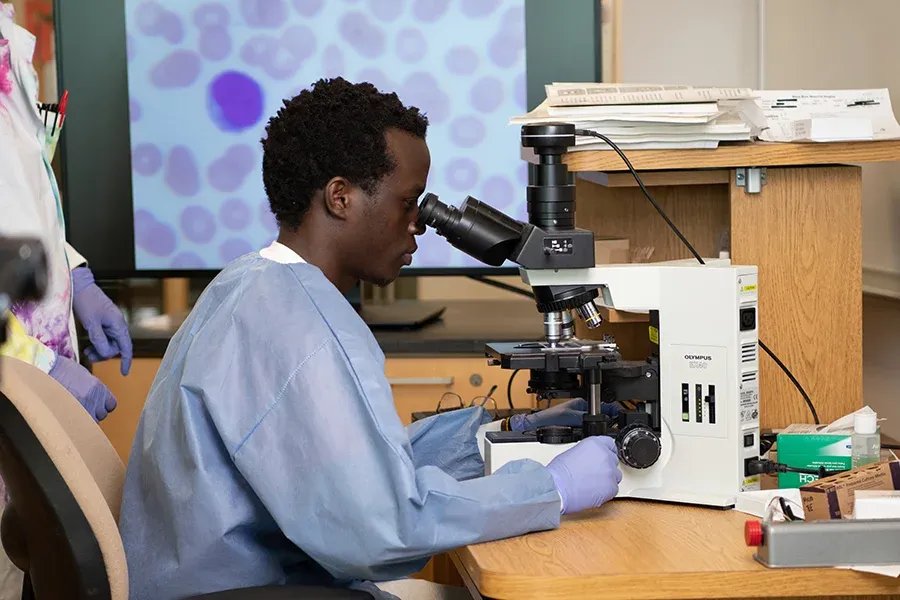
Are you intrigued by biology and chemistry, with a passion for healthcare? Consider turning your interests into a fulfilling career as a medical laboratory technician. In this role, you play a crucial part in the healthcare system by conducting clinical laboratory tests that aid in the detection, diagnosis, and treatment of diseases and medical conditions.
Your responsibilities as a medical laboratory technician encompass a wide range of analyses, spanning from waived and point-of-care testing to complex diagnostic procedures covering major medical laboratory areas such as hematology, clinical chemistry, immunohematology, microbiology, serology/immunology, coagulation, molecular diagnostics, and other emerging technologies. As the primary analyst, you'll make specimen-oriented decisions and hold vital responsibilities in information processing, training, and quality control monitoring wherever medical laboratory testing is conducted.
Graduates are eligible to take a national certification exam offered by the American Society for Clinical Pathologists' (ASCP) Board of Certification (BOC). It's important to note that passing this exam is not a graduation requirement, but it can significantly enhance your credentials and career prospects in the field of medical laboratory technology.


