Summer

Individualized Technical Studies

108251
AS
60.00

The Individualized Technical Studies (ITS) associate degree is a flexible program intended for students with specific career goals that can’t be met by other degree programs at Western. It is a customized program that allows you to draw from a variety of existing courses in traditional disciplines and programs. You are encouraged to explore credit for prior learning (CPL) based on previous work experience, coursework, and military service training. CPL enables you to accelerate the completion of your educational goals.

Examples of an ITS degree could be:

  • Childcare Administration: Combining Early Childhood core program classes with Human Services and Business and Management courses
  • Marketing and Design: Pairing courses from Marketing with Art, A/V Technology, and Communications courses
  • Criminal Justice Management: Combining Law, Public Safety, and Security courses with Business, Management, and Administration courses
  • Business Management & Sales: Coupling Business and Management with Administration and Marketing courses
  • Computer Support Manager: Pairing Information Technology courses with Business or Management with Administration courses
$10,069
Location
La Crosse

Previous education and work experience could qualify for Credit for Prior Learning, saving you time and money. Find out more about what may apply to this program.

Additional Requirements

  • To determine if the ITS program meets your needs, contact Kim Panzer, Credit for Prior Learning Specialist/ITS Program to schedule an appointment to review the ITS self-assessment and begin the process of completing the ITS Program Plan. You can reach Kim by phone at 608-785-9873 or by email at CPL@westerntc.edu.

Most of Western’s classes require the use of a personal computer or laptop, standard software, internet access, and other technology-related items.

If you do not have a personal computer or laptop, or if the one you have does not meet the following criteria, resources may be available. Submit a Student Resource Request using our online form.

Computer/Laptop Hardware

  • Smartphones are not recommended for completing assignments.
  • Chromebooks are not recommended due to issues with installing software that is needed for classes, such as Office 365.
  • Web camera with microphone (usually built into newer laptops or can be purchased separately) is necessary for online participation.

Software Needs

For detailed specifications, please review Technology and Software Recommendations for Most Classes on Western’s IT Knowledgebase.

Campus Resources

Need Assistance?

  • Contact the Learning Commons! The staff are happy to answer questions, provide individualized assistance, and direct you to other supports as needed.
  • A minimum of 20 Core Credits must be focused in one discipline. A discipline is described as an area of interest:
    • Advanced Manufacturing
    • Agriculture & Natural Resources
    • Business & Professional Services
    • Design & Construction Technology
    • Education & Human Services
    • Health Sciences
    • Liberal Arts
    • Public Safety
    • Science, Technology, Engineering, & Math
    • Transportation
  • A minimum of 25% of the total program requirements must be earned at Western Technical College.
  • Time and completion of the ITS program is dependent on course offering options and your individual schedule.
  • The program is intended for currently employed individuals who have specific career objectives not met by Western Technical College’s existing degree programs.
  • The Adult Learning Specialist and an Occupational Advisor are required to assist with the development of the curriculum sequence and guide the student toward their career goals.

This program is part of a career pathway, a laddered approach to career education. It allows you to earn employer-recognized credentials that lead to job and career advancement.

1
Course Intro Information

Western offers most courses in a 7-week format, but course length can vary. There are two 7-week sessions in each term, so courses listed below may not be taken at the same time. See the 7-week sessions page for more information.

This course list gives you an idea of what coursework will be required but is not the official list. Current students should use the MyWestern self-service portal for academic planning.

General Studies: 21-30 credits

  • Behavioral Science – 3 credits (select one)
    • 809-198 Introduction to Psychology
    • 809-199 Psychology of Human Relations
    • Other 809 courses may be permitted
  • Communications – 6 credits (select two)
    • 801-195 English Comp 1
    • 801-198 Speech
    • 801-197 Technical Communication
    • Other 801 courses may be permitted
  • Math/Science – 3 credits (select one)
    • 804-107 College Math
    • 804-123 Math with Business Applications
    • Other 804 or 806 courses may be permitted
  • Social Science – 3 credits (select one)
    • 809-195 Economics
    • 809-196 Introduction to Sociology
    • 809-122 Introduction to American Government
    • Other 809 courses may be permitted
  • General Studies Electives – 6-15 credits
    • Additional courses electives

Individual Technical Studies: 39-40 credits

  • Core Credits – 20 credits (focused in one discipline)
  • Additional Credits – 19-20 credits (additional credits earned in other disciplines)


Total Credits: 60-70

icon - in-person learning format
In-Person
icon - calendar
Fall
Start
icon - calendar
Spring
Start
icon - calendar
Summer
Start

Other Programs in This Area of Interest

Choose from an Associate of Arts or Associate of Science track, or if you’re looking for something more hands on, consider Individualized Technical Studies. Graduates are prepared to continue their education at a school of their choice.

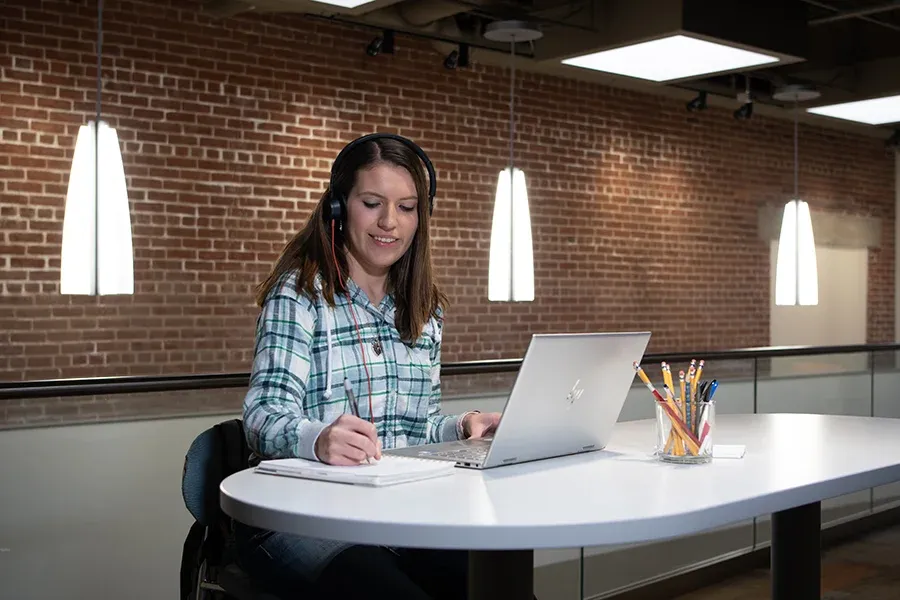
A students works at her computer at a desk.
Is New Program
Off

Medical Coding Specialist

315302
TECDIP
30.00

If you enjoy precision and detail, consider a medical coding career. As a medical coder, you'll review medical documentation provided by physicians and translate it into numeric codes that represent diagnoses and treatment. In addition to coding, courses also cover anatomy and physiology, medical terminology, diseases, health data management, and computer applications. The coded data are used for many purposes, including healthcare claims and research.

Graduates of this program are employed as entry-level coding specialists in hospitals, clinics, physician practices, surgery centers, care facilities, consulting companies, billing services, and insurance companies.

Graduates are eligible to take the Certified Coding Associate exam of the American Health Information Management Association (AHIMA). Additional certification exams and career opportunities are available for those with on-the-job coding experience.

$5,035
Location
La Crosse

Previous education and work experience could qualify for Credit for Prior Learning, saving you time and money. Find out more about what may apply to this program.

Graduates - 10
Graduates Responding - 6
Employed In Related Occupation - 0
Employed In Non-related Occupations - 0
Seeking Employment - 0
Continuing Education - 6
Not In Labor Market - 0
Graduates Responding Employed Part Time in Related Occupation - 0
Graduates Responding Employed Full Time in Related Occupation - 0
FT Median Annual Salary - $49,755 (Median earnings based on graduate exit interview data not available. This salary represents cost-of-living adjusted 25th percentile salary by occupation from Lightcast Analyst, used as a proxy for entry-level salary.)

Additional Requirements

  • To enroll in the Medical Coding Specialist program, first apply for admission to the College, then electronically sign the program's Technical Standards. You can find a link to this document below.

Most of Western’s classes require the use of a personal computer or laptop, standard software, internet access, and other technology-related items.

If you do not have a personal computer or laptop, or if the one you have does not meet the following criteria, resources may be available. Submit a Student Resource Request using our online form.

Computer/Laptop Hardware

  • Smartphones are not recommended for completing assignments.
  • Chromebooks are not recommended due to issues with installing software that is needed for classes, such as Office 365.
  • Web camera with microphone (usually built into newer laptops or can be purchased separately) is necessary for online participation.

Software Needs

For detailed specifications, please review Technology and Software Recommendations for Most Classes on Western’s IT Knowledgebase.

Campus Resources

Need Assistance?

  • Contact the Learning Commons! The staff are happy to answer questions, provide individualized assistance, and direct you to other supports as needed.

Certified Medical Coder

Certified Professional Coder

Health Information Coder

Medical Billing Specialist

Medical Coding Specialist

  • Collect health data
  • Use electronic applications to support coding and data collection
  • Apply coding and reimbursement systems
  • Model professionalism, ethics, self-reflection and patient advocacy

Our Health and Public Safety programs are required to report additional information to prospective students, including certification exams, licensure, program completion rates, etc. You can find this information in the document below:

Program Contact

Susan Summerfield
Program Chair, Medical Coding Specialist
608-789-6103
SummerfieldS@westerntc.edu

This program is part of a career pathway, a laddered approach to career education. It allows you to earn employer-recognized credentials that lead to job and career advancement.

1
icon - hybrid learning format
Hybrid
icon - calendar
Summer
Start

Other Programs in This Area of Interest

Western offers a wide range of Health Sciences programs designed to fit your interests and career aspirations and prepare you for a variety of healthcare settings.

Student at computer
Is New Program
Off

Dental Assistant

Remote video URL
315081
TECDIP
34.00

Take on an important role in the healthcare sector by becoming a dental assistant. In this career, you'll do more than traditional chairside assistance; you'll actively engage with patients, guiding them toward optimal oral health practices. Your responsibilities will extend to assisting dentists in various dental procedures, including general dentistry, oral surgery, endodontics, orthodontics, and pediatrics. You may also have opportunities to work in a dental lab, perform x-rays, schedule appointments, and manage office tasks.

Western's comprehensive technical diploma courses are designed to equip you with the skills necessary to excel in private practices, dental groups, or governmental agencies focused on dental services. The program covers essential skills, including four-handed dentistry, dental anatomy, radiography techniques, oral hygiene principles, adherence to OSHA standards, and effective communication.

Upon completion, you'll have the chance to enhance your credentials by pursuing certification through the Dental Assisting National Board examination. This opens doors to a fulfilling and impactful career in dental healthcare.

You will refine patient care techniques through realistic simulation experiences in our state-of-the-art Simulation and Extended Reality (XR) Labs. Learn more about the Simulation and XR Labs.

Program-specific courses are held in the Health Science Center, a shared facility located a few blocks from the La Crosse main campus. Check our maps page for specific location information.

$5,706
Location
La Crosse

Previous education and work experience could qualify for Credit for Prior Learning, saving you time and money. Find out more about what may apply to this program.

Graduates - 27
Graduates Responding - 13
Employed In Related Occupation - 8
Employed In Non-related Occupations - 1
Seeking Employment - 1
Continuing Education - 2
Not In Labor Market - 0
Graduates Responding Employed Part Time in Related Occupation - 1
PT Average Hours per Week - 34
PT Median Hourly Wage - $18.00
PT Hourly Wage Range - $18.00
Graduates Responding Employed Full Time in Related Occupation - 7
FT Average Hours per Week - 38
FT Median Hourly Wage - $20.00
FT Hourly Wage Range - $18.00 - $25.00
FT Median Annual Salary - $42,000
Related Occupations - Dental Admin, Dental Assistant

Additional Requirements

To enroll in the Dental Assistant program, first apply for admission to the College, then electronically sign the program's Technical Standards and complete a background check. You can find links to these documents below. In addition, you must complete a Job Shadow at a dental office.

Most of Western’s classes require the use of a personal computer or laptop, standard software, internet access, and other technology-related items.

If you do not have a personal computer or laptop, or if the one you have does not meet the following criteria, resources may be available. Submit a Student Resource Request using our online form.

Computer/Laptop Hardware

  • Smartphones are not recommended for completing assignments.
  • Chromebooks are not recommended due to issues with installing software that is needed for classes, such as Office 365.
  • Web camera with microphone (usually built into newer laptops or can be purchased separately) is necessary for online participation.

Software Needs

For detailed specifications, please review Technology and Software Recommendations for Most Classes on Western’s IT Knowledgebase.

Campus Resources

Need Assistance?

  • Contact the Learning Commons! The staff are happy to answer questions, provide individualized assistance, and direct you to other supports as needed.

Dental Assistant

Dental Office Manager

Chairside Dental Assistant

Dental/Ortho Assistant

Dental Review Coordinator

The program in Dental Assisting is accredited by the Commission on Dental Accreditation. The Commission is a specialized accrediting body recognized by the United States Department of Education. The Commission on Dental Accreditation can be contacted at 312-440-4653 or at 211 East Chicago Avenue, Chicago, IL 60611-2678. The Commission’s web address is: www.ada.org/en/coda.

Image
Commission on Dental Accreditation logo.
  • Perform a variety of advanced supportive dental procedures
  • Manage infection and hazard control
  • Produce diagnostic intraoral and extraoral radiographic images on a variety of patients
  • Perform advanced dental laboratory procedures
  • Demonstrate professional behaviors, ethics, and appearance
  • Perform dental office business procedures

For more information, view the Dental Assistant Program Handbook.

Program Contact

Nicole Schmit
Program Chair, Dental Assistant
608-896-9843
schmitn@westerntc.edu 

This program is part of a career pathway, a laddered approach to career education. It allows you to earn employer-recognized credentials that lead to job and career advancement.

1
icon - in-person learning format
In-Person
icon - calendar
Summer
Start

Other Programs in This Area of Interest

Western offers a wide range of Health Sciences programs designed to fit your interests and career aspirations and prepare you for a variety of healthcare settings.

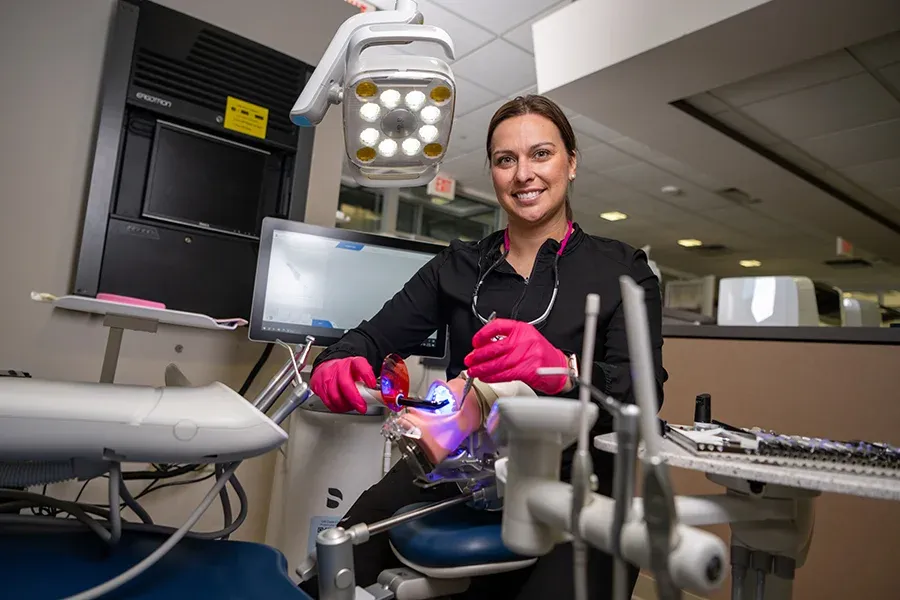
A dental assistant student poses with equipment in a dentist's exam room.
Is New Program
Off

Building Construction & Cabinetmaking

Remote video URL
314102
TECDIP
37.00

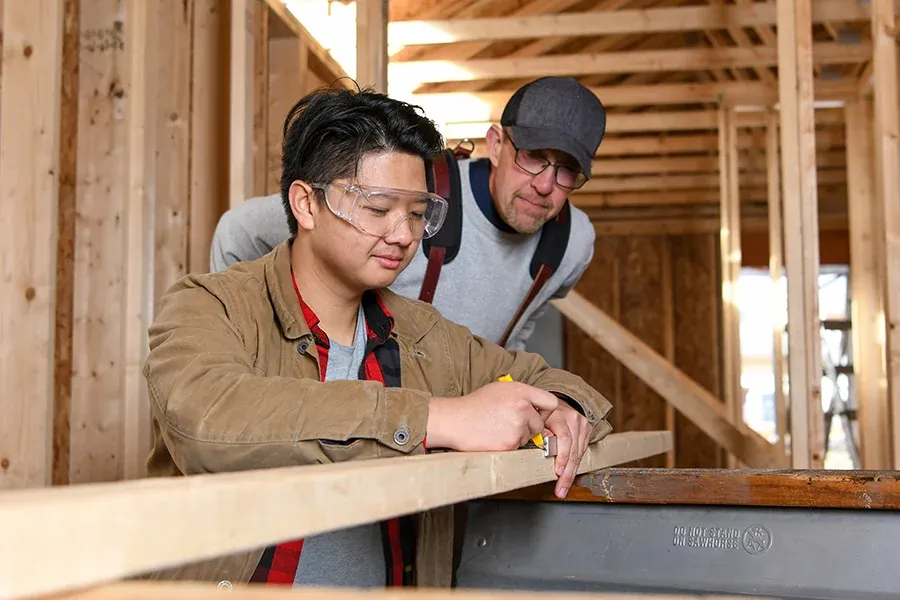
Our Building Construction and Cabinetmaking program helps you build on your knowledge and develop your skills to prepare for employment in the fields of construction and cabinet making.

You'll study fundamentals of building design, site development, building layout operations, concrete applications, cabinet design and construction, and materials used in the construction and cabinet making industries. You'll be instructed in safe and proper use of hand tools, portable power tools, and stationary power equipment. In addition, you'll have the opportunity to apply framing, interior finishing, and exterior finishing techniques at actual jobsites, and work on commercial framing and finishing projects in the cabinet shop and framing lab. Related mathematics, blueprint reading, estimating, building science principles, and OSHA 10 are part of the training.

Graduates are ready for a variety of careers, including cabinetmaking, residential and commercial carpentry, general construction, working at building supply stores or lumberyards, and other positions in the construction industry.

Western operates on three 15-week terms each year, with each term divided into two 7-week sessions. The Building Construction Cabinetmaking program begins during the second session of the summer term, typically in late June or early July.

$6,209
Location
La Crosse

Previous education and work experience could qualify for Credit for Prior Learning, saving you time and money. Find out more about what may apply to this program.

Graduates - 27
Graduates Responding - 9
Employed In Related Occupation - 7
Employed In Non-related Occupations - 0
Seeking Employment - 0
Continuing Education - 2
Not In Labor Market - 0
Graduates Responding Employed Part Time in Related Occupation - 0
Graduates Responding Employed Full Time in Related Occupation - 7
FT Average Hours per Week - 41
FT Median Hourly Wage - $24.50
FT Hourly Wage Range - $23.00 - $27.00
FT Median Annual Salary - $54,500
Related Occupations - Carpenter, Install Technician

Most of Western’s classes require the use of a personal computer or laptop, standard software, internet access, and other technology-related items.

If you do not have a personal computer or laptop, or if the one you have does not meet the following criteria, resources may be available. Submit a Student Resource Request using our online form.

Computer/Laptop Hardware

  • Smartphones are not recommended for completing assignments.
  • Chromebooks are not recommended due to issues with installing software that is needed for classes, such as Office 365.
  • Web camera with microphone (usually built into newer laptops or can be purchased separately) is necessary for online participation.

Software Needs

For detailed specifications, please review Technology and Software Recommendations for Most Classes on Western’s IT Knowledgebase.

Campus Resources

Need Assistance?

  • Contact the Learning Commons! The staff are happy to answer questions, provide individualized assistance, and direct you to other supports as needed.

Carpenter

Cabinet Maker

Construction Crew/Foreman

Woodworker

Furniture Maker

  • Use hand and power tools and equipment
  • Apply industry recognized safety practices and procedures
  • Analyze sustainable building practices
  • Interpret construction drawings
  • Interpret building codes
  • Demonstrate industry building practices and material application
  • Calculate the cost of a project
  • Recommend a plan of procedure to eliminate wasted time and materials
  • Demonstrate industry cabinetmaking practices and material application

This program is part of a career pathway, a laddered approach to career education. It allows you to earn employer-recognized credentials that lead to job and career advancement.

1
icon - in-person learning format
In-Person
icon - calendar
Summer
Start

Other Programs in This Area of Interest

Choose to design innovative spaces, manage energy-efficient buildings, master the art of carpentry, and so much more. Join a program taught by experienced instructors in state-of-the-art facilities.

An instructor supervises a student as he measures lumber for a building.
Is New Program
Off

Nursing Assistant

Remote video URL
305431
TECDIP
2.00

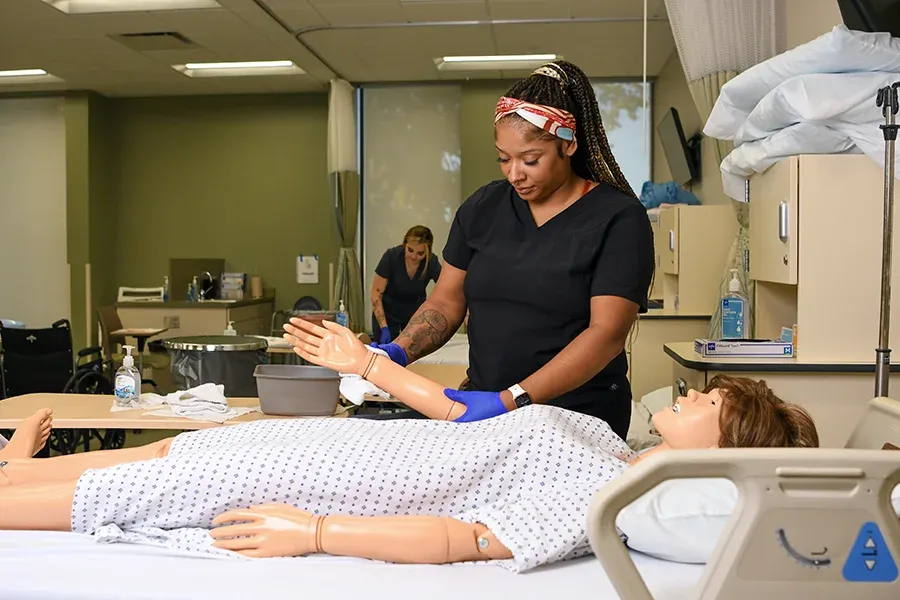
The Nursing Assistant program is your pathway to a rewarding NA career and also serves as a foundation for pursuing other health-related programs. Over the course of 81 hours, you will acquire and demonstrate essential skills, including effective communication, basic nursing and personal care, respect for client's rights, and the care of clients with dementias. This program is proudly recognized by the Wisconsin Department of Health Services.

With this technical diploma, you become eligible to take the Wisconsin Nursing Assistant competency evaluation. Passing this evaluation allows you to be included on the Wisconsin Nurse Aide Registry, opening doors to employment opportunities in various healthcare settings such as nursing homes, hospitals, home health agencies, CBRFs, and more. This program equips you with the knowledge and skills necessary to provide crucial care and support to individuals in need within the healthcare industry.

To view the Nursing Assistant program’s required disclosure on professional licensure, please click here (PDF).

$336
Location
La Crosse
Location
Black River Falls
Location
Independence
Location
Mauston
Location
Tomah
Location
Viroqua

Previous education and work experience could qualify for Credit for Prior Learning, saving you time and money. Find out more about what may apply to this program.

Additional Requirements

  • To enroll in the Nursing Assistant program, first apply for admission to the College, then electronically sign the program's Technical Standards, complete a background check, and provide proof of immunization (including a TB Test*). Please see the details below.

Most of Western’s classes require the use of a personal computer or laptop, standard software, internet access, and other technology-related items.

If you do not have a personal computer or laptop, or if the one you have does not meet the following criteria, resources may be available. Submit a Student Resource Request using our online form.

Computer/Laptop Hardware

  • Smartphones are not recommended for completing assignments.
  • Chromebooks are not recommended due to issues with installing software that is needed for classes, such as Office 365.
  • Web camera with microphone (usually built into newer laptops or can be purchased separately) is necessary for online participation.

Software Needs

For detailed specifications, please review Technology and Software Recommendations for Most Classes on Western’s IT Knowledgebase.

Campus Resources

Need Assistance?

  • Contact the Learning Commons! The staff are happy to answer questions, provide individualized assistance, and direct you to other supports as needed.

Nurse Aide - C.N.A.

Home Health Aide

Certified Nursing Assistant

Personnel Care Worker

Patient Care Associate

  • Communicate effectively with clients, family, and co-workers
  • Protect rights of clients
  • Demonstrate ethical and legal responsibilities
  • Work cooperatively in a team environment
  • Provide holistic, safe care to diverse populations
  • Demonstrate reporting and documentation
  • Assist clients with rehabilitation and restorative care
  • Provide safe care for clients with acute and chronic health conditions
  • Complete educational requirements for the WI NA competency evaluation

Our Health and Public Safety programs are required to report additional information to prospective students, including certification exams, licensure, program completion rates, etc. You can find this information in the document below:

CNA Out-of-State Transfer Information (PDF)

Refer to the Nursing Assistant Schedule for a complete listing of upcoming courses:

Program Contacts

Marcia Robbins
Program Co-Chair, Nursing Assistant
608-789-4762
RobbinsM@westerntc.edu 

For admission help contact: admissionscoach@westerntc.edu

This program is part of a career pathway, a laddered approach to career education. It allows you to earn employer-recognized credentials that lead to job and career advancement.

0
icon - in-person learning format
In-Person
icon - calendar
Fall
Start
icon - calendar
Spring
Start
icon - calendar
Summer
Start

Other Programs in This Area of Interest

Western offers a wide range of Health Sciences programs designed to fit your interests and career aspirations and prepare you for a variety of healthcare settings.

Student practicing on hospital doll in classroom
Is New Program
Off

Advanced EMT

Remote video URL
305316
TECDIP
5.00

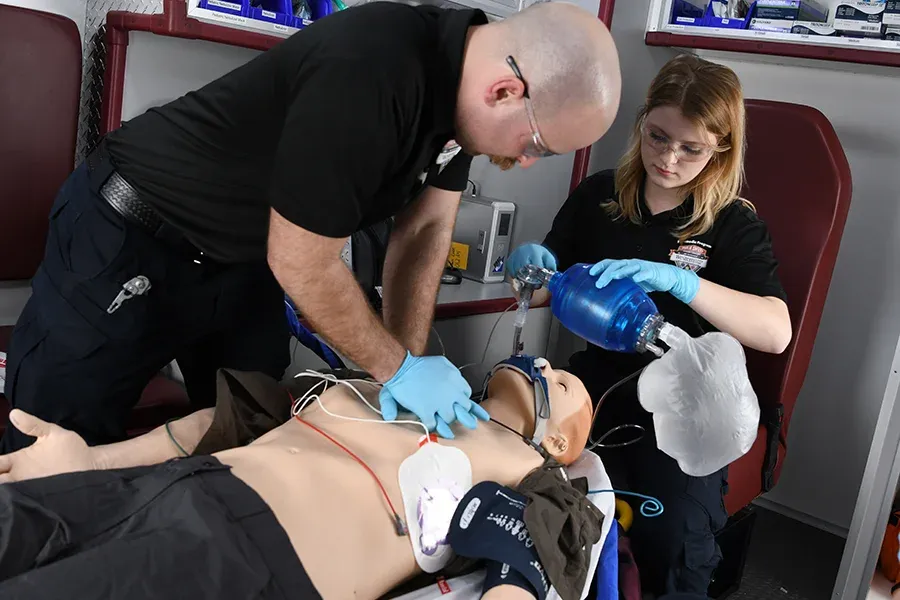
If you are already certified as an Emergency Medical Technician (EMT), this course provides additional training that allows you to provide even more lifesaving care. Advanced patient assessment, communication, and beginning advanced life support interventions are among the topics covered.

To view the Advanced EMT program’s required disclosure on professional licensure, please click here (PDF).

$839
Location
La Crosse
Location
Black River Falls
Location
Independence
Location
Mauston
Location
Tomah
Location
Viroqua
Location
Sparta

Previous education and work experience could qualify for Credit for Prior Learning, saving you time and money. Find out more about what may apply to this program.

Graduates - 20
Graduates Responding - 6
Employed In Related Occupation - 0
Employed In Non-related Occupations - 3
Seeking Employment - 0
Continuing Education - 3
Not In Labor Market - 0
Graduates Responding Employed Part Time in Related Occupation - 0
Graduates Responding Employed Full Time in Related Occupation - 0
FT Median Annual Salary - $34,229 (Median earnings based on graduate exit interview data not available. This salary represents cost-of-living adjusted 25th percentile salary by occupation from Lightcast Analyst, used as a proxy for entry-level salary.)

Additional Requirements

To enroll in the Advanced EMT Certificate program, first apply for admission to the College, then electronically sign the program's Technical Standards, complete a background check, provide proof of immunization (including a TB Test), read and return a signed copy of the supplemental information document, and complete American Heart Association BLS Healthcare Provider CPR certification. You can find links to these document below. In addition, you must hold a Wisconsin EMT-Basic License. Please see the details below.

Most of Western’s classes require the use of a personal computer or laptop, standard software, internet access, and other technology-related items.

If you do not have a personal computer or laptop, or if the one you have does not meet the following criteria, resources may be available. Submit a Student Resource Request using our online form.

Computer/Laptop Hardware

  • Smartphones are not recommended for completing assignments.
  • Chromebooks are not recommended due to issues with installing software that is needed for classes, such as Office 365.
  • Web camera with microphone (usually built into newer laptops or can be purchased separately) is necessary for online participation.

Software Needs

For detailed specifications, please review Technology and Software Recommendations for Most Classes on Western’s IT Knowledgebase.

Campus Resources

Need Assistance?

  • Contact the Learning Commons! The staff are happy to answer questions, provide individualized assistance, and direct you to other supports as needed.

EMT - Basic

EMT - Advanced

Emergency Medical Technician

EMT - Ambulance Service

Telecommunicator 911 Dispatch

  • Prepare for incident response and EMS operations
  • Integrate pathophysiological principles and assessment findings to provide appropriate patient care
  • Demonstrate AEMT skills associated with established standards and procedures for a variety of patient encounters
  • Communicate effectively with others
  • Demonstrate professional behavior
  • Meet state competencies for AEMT certification

This program is part of a career pathway, a laddered approach to career education. It allows you to earn employer-recognized credentials that lead to job and career advancement.
1
icon - hybrid learning format
Hybrid
icon - calendar
Fall
Start
icon - calendar
Spring
Start
icon - calendar
Summer
Start

Other Programs in This Area of Interest

This Area of Interest is for those who want to learn to protect people, respond in emergency situations, and make a difference in the community.

EMT students practice resuscitation techniques on a dummy.
Is New Program
Off

Emergency Medical Technician

Remote video URL
305313
TECDIP
7.00

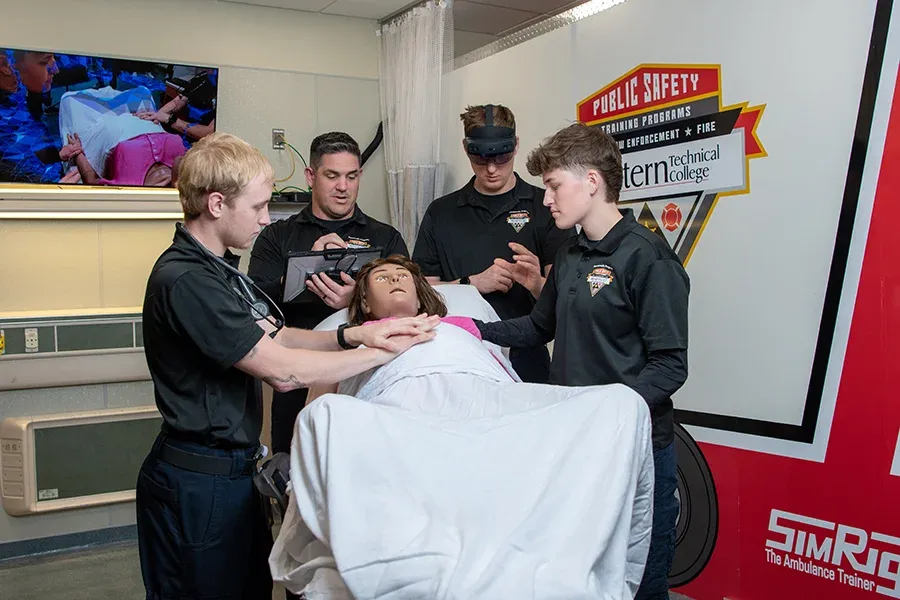
As an Emergency Medical Technician (EMT), you're on the front lines providing lifesaving care to people in need. You'll learn how to assess a patient's illness or injury, render aid, and use proper procedures and precautions when treating a patient. This 252-hour program prepares you for all aspects of emergency medical care, including medical and trauma situations sanctioned by the Wisconsin Division of Health. Although most EMTs have historically worked for ambulance services, many also find employment in fire departments, clinics, and hospitals.

  This program contains the EMR (Emergency Medical Responder) EMT Part 1 course (3 credits) and the EMT Part 2 course (4 credits), meeting requirements for licensure in Wisconsin and certification with the National Registry of Emergency Medical Technicians. Take the full program in one term and earn a technical diploma upon successful completion. You will be required to take a practical and written exam to become nationally registered and then apply for a license to work as EMTs in Wisconsin. Continue your education to earn the EMT-Paramedic Technical Diploma and/or the Paramedic Technician associate degree for further job opportunities and earning potential.

The Emergency Medical Technician program is offered in a variety of ways.

  • EMT – Technical diploma: Take the full program in one term – 252 hours – and earn a technical diploma upon completion.
  • Emergency Medical Responder to Emergency Medical Technician Part 1 (EMR-EMT Part 1): This course is the first part of the two-course full EMT Program. The course provides foundational knowledge for Emergency Medical Technician (EMT) candidates and all requirements for Emergency Medical Responder (EMR) candidates. Topics include basic anatomy and physiology, patient assessment, traumatic injury management, airway management, cardiac management, and basic medical care. Upon successful completion, candidates will be eligible to participate in the National Registry of EMT's Emergency Medical Responder exams required for the Wisconsin EMR certification. There are no pre-requisites to this course. You have the option to step out as an EMR or continue in EMT Part 2 in order to complete the full EMT Program.
  • Emergency Medical Technician Part 2 (EMT Part 2): This course is the second part of the two-course full EMT Program. It will further build upon the base knowledge of the EMR and EMT Part 1 course. Topics include expanded anatomy, physiology, and pathophysiology, disease processes, more complex patient assessment, and critical thinking skills. Additional skills will be covered as allowed by the Wisconsin Department of Health Services EMS Section Scope of Practice for EMTs. Upon successful completion, candidates will be eligible to participate in the National Registry of EMTs exam required for Wisconsin EMT licensure. Pre-requisites for this course are concurrent enrollment in the EMR-EMT Part 1 course, OR completion of an EMR stand-alone course, or EMR to EMT Part 1, at a Wisconsin Technical College System school within the past 24 months, or a current Wisconsin license as an Emergency Medical Responder.

To view the Emergency Medical Technician program’s required disclosure on professional licensure, please click here (PDF).

$1,175
Location
La Crosse
Location
Black River Falls
Location
Independence
Location
Mauston
Location
Tomah
Location
Viroqua
Location
Sparta

Previous education and work experience could qualify for Credit for Prior Learning, saving you time and money. Find out more about what may apply to this program.

Additional Requirements

To enroll in the Emergency Medical Technician program, first apply for admission to the College, then complete a background check, electronically sign the program's Technical Standards, and read and return a signed copy of the supplemental information document. You can find links to these document below.

Emergency Medical Technician Full Program
EMR to EMT Part 1
EMT Part 2

Most of Western’s classes require the use of a personal computer or laptop, standard software, internet access, and other technology-related items.

If you do not have a personal computer or laptop, or if the one you have does not meet the following criteria, resources may be available. Submit a Student Resource Request using our online form.

Computer/Laptop Hardware

  • Smartphones are not recommended for completing assignments.
  • Chromebooks are not recommended due to issues with installing software that is needed for classes, such as Office 365.
  • Web camera with microphone (usually built into newer laptops or can be purchased separately) is necessary for online participation.

Software Needs

For detailed specifications, please review Technology and Software Recommendations for Most Classes on Western’s IT Knowledgebase.

Campus Resources

Need Assistance?

  • Contact the Learning Commons! The staff are happy to answer questions, provide individualized assistance, and direct you to other supports as needed.

Emergency Medical Technician

  • Prepare for incident response and EMS operations
  • Integrate pathophysiological principles and assessment findings to provide appropriate patient care
  • Demonstrate EMT skills associated with established standards and procedures for a variety of patient encounters
  • Communicate effectively with others
  • Demonstrate professional behavior
  • Meet state competencies for EMT certification

This program is part of a career pathway, a laddered approach to career education. It allows you to earn employer-recognized credentials that lead to job and career advancement.

0
icon - hybrid learning format
Hybrid
icon - calendar
Fall
Start
icon - calendar
Spring
Start
icon - calendar
Summer
Start

Other Programs in This Area of Interest

This Area of Interest is for those who want to learn to protect people, respond in emergency situations, and make a difference in the community.

A group of EMT students work together to practice techniques on a dummy in the simulation lab.
Is New Program
Off

Criminal Justice-Law Enforcement 720 Academy

305042
TECDIP
22.00

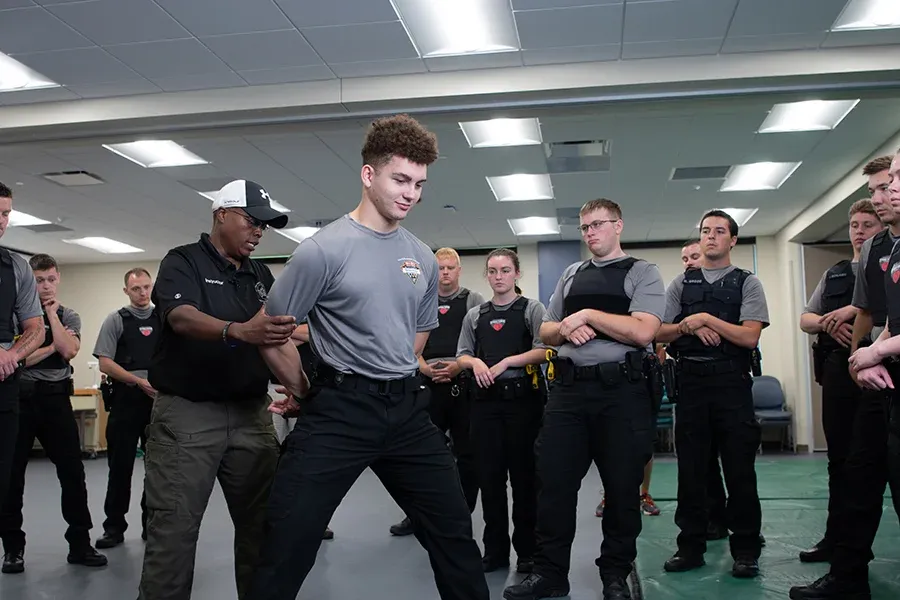
This program is specifically designed for those with a minimum of 40 accredited college-level credits who seek to meet Wisconsin certification requirements as a law enforcement officer. In this role, you'll be responsible for the preservation of law and order in your community. You'll learn numerous skills related to the profession of law enforcement. Your training will also include crime prevention, crime investigation, vehicle patrols, and assisting the public.

This program includes in-class fitness training and other physical education such as defensive tactics and fire arms training. You'll have plenty of opportunities to practice your skills with hands-on training and scenario-based field simulations.

Find out more about Western's Public Safety Training Facility.

To view the Criminal Justice-Law Enforcement 720 Academy program’s required disclosure on professional licensure, please click here (PDF).

$3,692
Location
Sparta

Previous education and work experience could qualify for Credit for Prior Learning, saving you time and money. Find out more about what may apply to this program.

Graduates - 72
Graduates Responding - 20
Employed In Related Occupation - 13
Employed In Non-related Occupations - 4
Seeking Employment - 0
Continuing Education - 2
Not In Labor Market - 1
Graduates Responding Employed Part Time in Related Occupation - 0
Graduates Responding Employed Full Time in Related Occupation - 13
FT Average Hours per Week - 43
FT Median Hourly Wage - $32.00
FT Hourly Wage Range - $27.04 - $34.50
FT Median Annual Salary - $53,700
Related Occupations - Armed Security Officer, Deputy Sheriff, Law Enforcement Officer, Patrol Deputy, Police Office

Additional Requirements

  • High School or GED/HSED Transcript is required.
  • For an admission packet for the 720-hour Law Enforcement Academy, please contact the Sparta Public Safety Training Center by phone at 608-789-4747 or by email at sparta@westerntc.edu.

The following requirements must be met by students enrolling in preparatory law enforcement officer training:

  • Be 18 years of age or older.
  • Possess a general educational development diploma or be a high school graduate.
  • Possess either a two‐year associate degree from a Wisconsin technical college system district or its accredited equivalent from another state or a minimum of 40‐accredited credits (semester credits) or 90‐accredited quarter credits.
  • Possess a valid Wisconsin driver’s license or other such valid operator’s permit recognized by the Wisconsin Department of Transportation as authorizing operation of a motor vehicle in Wisconsin.
  • Must not have been convicted of any federal felony or of any offense which if committed in Wisconsin could be punished as a felony unless the applicant has been granted an absolute and unconditional pardon.
  • Must not have been convicted of any misdemeanor crime of domestic violence unless the applicant has been granted an absolute and unconditional pardon.
  • Be citizens of the United States.
  • Undergo a medical assessment by a Wisconsin licensed physician, physician assistant, or nurse practitioner to verify that they can meet the physical standards required of a law enforcement officer.
  • Complete a satisfactory oral interview with a panel of law enforcement executives or with teaching or counseling staff affiliated with the training school to determine suitability for law enforcement employment and to assess applicant demeanor, background and ability to communicate.

Cost for the 720 Academy

The cost for the 720 Law Enforcement Academy is $5,000. This is based upon an estimated $3,700 tuition costs and an additional estimated $1,300 for law enforcement skills evaluation fees.

Most of Western’s classes require the use of a personal computer or laptop, standard software, internet access, and other technology-related items.

If you do not have a personal computer or laptop, or if the one you have does not meet the following criteria, resources may be available. Submit a Student Resource Request using our online form.

Computer/Laptop Hardware

  • Smartphones are not recommended for completing assignments.
  • Chromebooks are not recommended due to issues with installing software that is needed for classes, such as Office 365.
  • Web camera with microphone (usually built into newer laptops or can be purchased separately) is necessary for online participation.

Software Needs

For detailed specifications, please review Technology and Software Recommendations for Most Classes on Western’s IT Knowledgebase.

Campus Resources

Need Assistance?

  • Contact the Learning Commons! The staff are happy to answer questions, provide individualized assistance, and direct you to other supports as needed.

Police Officer

Deputy Sheriff

Jailer

Security Officer

Law Enforcement Officer

State Patrol Officer

  • Think critically
  • Manage emergencies
  • Communicate effectively
  • Demonstrate professionalism
  • Conduct investigations
  • Interact with others
  • Demonstrate tactical skills \[applies to Certification Track only\]

This program is part of a career pathway, a laddered approach to career education. It allows you to earn employer-recognized credentials that lead to job and career advancement.

1
icon - in-person learning format
In-Person
icon - calendar
Spring
Start
icon - calendar
Summer
Start

Other Programs in This Area of Interest

This Area of Interest is for those who want to learn to protect people, respond in emergency situations, and make a difference in the community.

Students practice self-defense moves in a classroom.
Is New Program
Off

Associate of Science

208002
AS
61.00

Western's University Transfer programs are equivalent to the first- and second-year general education courses offered at traditional universities. Our Associate of Science program prepares you for Bachelor of Science programs in the University of Wisconsin System as well as many other four-year transfer partners.

General education courses include English, math, science, history, social sciences, the humanities, and health and wellness courses. You could save 40 percent by taking these AS degree courses at Western before transferring to a four-year program of study in the natural and physical sciences or social sciences!

If you have a particular college or university in mind, reach out to a Western College Advisor before selecting courses in order to develop a transfer plan or select one of the direct transfer plans developed with our four-year partners.

$12,866
Location
La Crosse
Location
Online

Previous education and work experience could qualify for Credit for Prior Learning, saving you time and money. Find out more about what may apply to this program.

Graduates - 35
Graduates Responding - 15
Employed In Related Occupation - 1
Employed In Non-related Occupations - 5
Seeking Employment - 1
Continuing Education - 8
Not In Labor Market - 0
Graduates Responding Employed Part Time in Related Occupation - 1
PT Average Hours per Week - 20
PT Median Annual Salary - $8,000
Related Occupations - Substitute Teacher

Most of Western’s classes require the use of a personal computer or laptop, standard software, internet access, and other technology-related items.

If you do not have a personal computer or laptop, or if the one you have does not meet the following criteria, resources may be available. Submit a Student Resource Request using our online form.

Computer/Laptop Hardware

  • Smartphones are not recommended for completing assignments.
  • Chromebooks are not recommended due to issues with installing software that is needed for classes, such as Office 365.
  • Web camera with microphone (usually built into newer laptops or can be purchased separately) is necessary for online participation.

Software Needs

For detailed specifications, please review Technology and Software Recommendations for Most Classes on Western’s IT Knowledgebase.

Campus Resources

Need Assistance?

  • Contact the Learning Commons! The staff are happy to answer questions, provide individualized assistance, and direct you to other supports as needed.
  • Write and speak effectively for diverse audiences
  • Apply reading comprehension skills in a variety of contexts
  • Apply research methods for academic inquiry
  • Develop mathematical reasoning and strategies to solve a variety of problems
  • Examine physical phenomena using scientific tools and methods
  • Grow in communicative language proficiency and cultural competence in a language other than English
  • Use the tools and methods of the social sciences to explore historical and/or social phenomena.
  • Develop an awareness of the embeddedness of prejudice, discrimination, and privilege in historical systems of thought and practice

How is this different from the Associate of Arts program?

This program differs from the Associate of Arts program in the following ways:

  • 10 additional credits in the Mathematics and Natural Science categories
  • 12 fewer credits in the Humanities and Social Science categories
  • History requirement
  • Differing elective credits

View Course Options Here (PDF)

This program is part of a career pathway, a laddered approach to career education. It allows you to earn employer-recognized credentials that lead to job and career advancement.

1
Course Intro Information

Western offers most courses in a 7-week format, but course length can vary. There are two 7-week sessions in each term, so courses listed below may not be taken at the same time. See the 7-week sessions page for more information.

This course list gives you an idea of what coursework will be required but is not the official list. Current students should use the MyWestern self-service portal for academic planning.

View the Associate of Science course options.

icon - in-person learning format
In-Person
icon - online learning format
Online
icon - calendar
Summer
Start
icon - calendar
Fall
Start
icon - calendar
Spring
Start

Other Programs in This Area of Interest

Choose from an Associate of Arts or Associate of Science track, or if you’re looking for something more hands on, consider Individualized Technical Studies. Graduates are prepared to continue their education at a school of their choice.

A student works at a laptop in a classroom.
Is New Program
Off

Associate of Arts

208001
AS
60.00

Western's University Transfer programs are equivalent to the first- and second-year general education courses offered at traditional universities. Our Associate of Arts program prepares you for Bachelor of Arts programs in the University of Wisconsin System as well as many other four-year transfer partners. You can save thousands of dollars and earn the same bachelor's degree!

Our classes are tailored to fit your needs:

  • Gaining knowledge and experience in the arts that broaden perspectives.
  • Increasing problem solving abilities.
  • Developing improved communication skills.
  • Cultivating college-level literacy practices.

Choose courses that emphasize your individual educational goals! The AA degree is designed to provide essential soft skills for future careers and support transfer into arts, social sciences, or humanities degree programs.

If you have a particular college or university in mind, reach out to a Western College Advisor before selecting courses in order to develop a transfer plan or select one of the direct transfer plans developed with our four-year partners.

$12,655
Location
La Crosse
Location
Online

Previous education and work experience could qualify for Credit for Prior Learning, saving you time and money. Find out more about what may apply to this program.

Graduates - 32
Graduates Responding - 15
Employed In Related Occupation - 6
Employed In Non-related Occupations - 2
Seeking Employment - 1
Continuing Education - 6
Not In Labor Market - 0
Graduates Responding Employed Part Time in Related Occupation - 1
PT Average Hours per Week - 10
PT Median Annual Salary - $8,300
Graduates Responding Employed Full Time in Related Occupation - 3
FT Average Hours per Week - 45
FT Median Annual Salary - $53,000
Related Occupations - Adolescent Secure Worker, Community Outreach Specialist, Elementary Special Ed Teacher, Lactation Peer Counselor, Patient Registration Supervisor

Most of Western’s classes require the use of a personal computer or laptop, standard software, internet access, and other technology-related items.

If you do not have a personal computer or laptop, or if the one you have does not meet the following criteria, resources may be available. Submit a Student Resource Request using our online form.

Computer/Laptop Hardware

  • Smartphones are not recommended for completing assignments.
  • Chromebooks are not recommended due to issues with installing software that is needed for classes, such as Office 365.
  • Web camera with microphone (usually built into newer laptops or can be purchased separately) is necessary for online participation.

Software Needs

For detailed specifications, please review Technology and Software Recommendations for Most Classes on Western’s IT Knowledgebase.

Campus Resources

Need Assistance?

  • Contact the Learning Commons! The staff are happy to answer questions, provide individualized assistance, and direct you to other supports as needed.
  • Write and speak effectively for diverse audiences
  • Apply reading comprehension skills in a variety of contexts
  • Apply research methods for academic inquiry
  • Develop mathematical reasoning and strategies to solve a variety of problems
  • Examine physical phenomena using scientific tools and methods
  • Grow in communicative language proficiency and cultural competence in a language other than English
  • Use the tools and methods of the social sciences to explore historical and/or social phenomena.
  • Develop an awareness of the embeddedness of prejudice, discrimination, and privilege in historical systems of thought and practice

How is this different from the Associate of Science program?

This program differs from the Associate of Science program in the following ways:

  • 12 additional credits in the Humanities and Social Science categories
  • 10 fewer credits in the Mathematics and Natural Science categories
  • No History requirement
  • Differing elective credits

View Course Options Here (PDF)

This program is part of a career pathway, a laddered approach to career education. It allows you to earn employer-recognized credentials that lead to job and career advancement.
1
Course Intro Information

Western offers most courses in a 7-week format, but course length can vary. There are two 7-week sessions in each term, so courses listed below may not be taken at the same time. See the 7-week sessions page for more information.

This course list gives you an idea of what coursework will be required but is not the official list. Current students should use the MyWestern self-service portal for academic planning.

View the Associate of Arts course options.

icon - in-person learning format
In-Person
icon - online learning format
Online
icon - calendar
Summer
Start
icon - calendar
Fall
Start
icon - calendar
Spring
Start

Other Programs in This Area of Interest

Choose from an Associate of Arts or Associate of Science track, or if you’re looking for something more hands on, consider Individualized Technical Studies. Graduates are prepared to continue their education at a school of their choice.

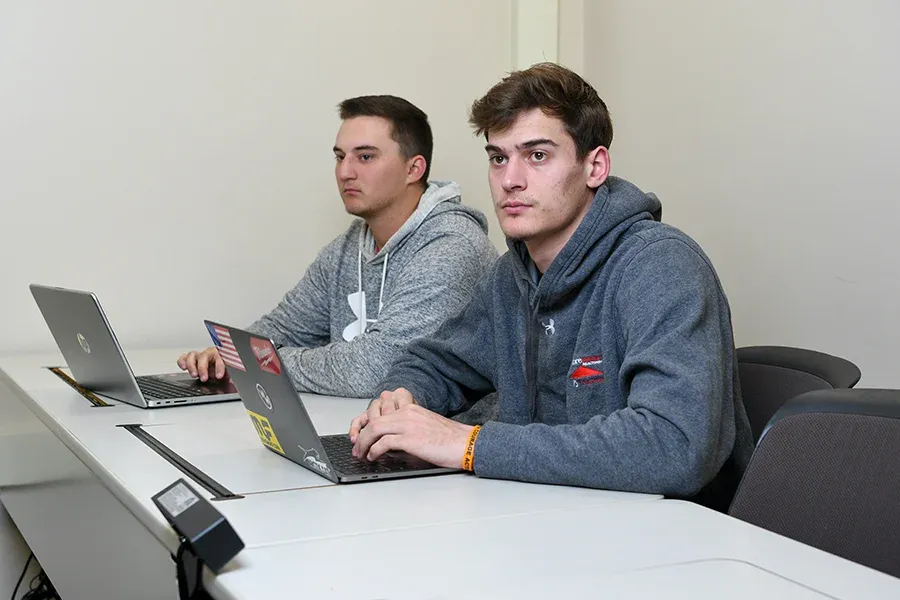
Two students listen to a lecture in a classroom.
Is New Program
Off
Subscribe to Summer